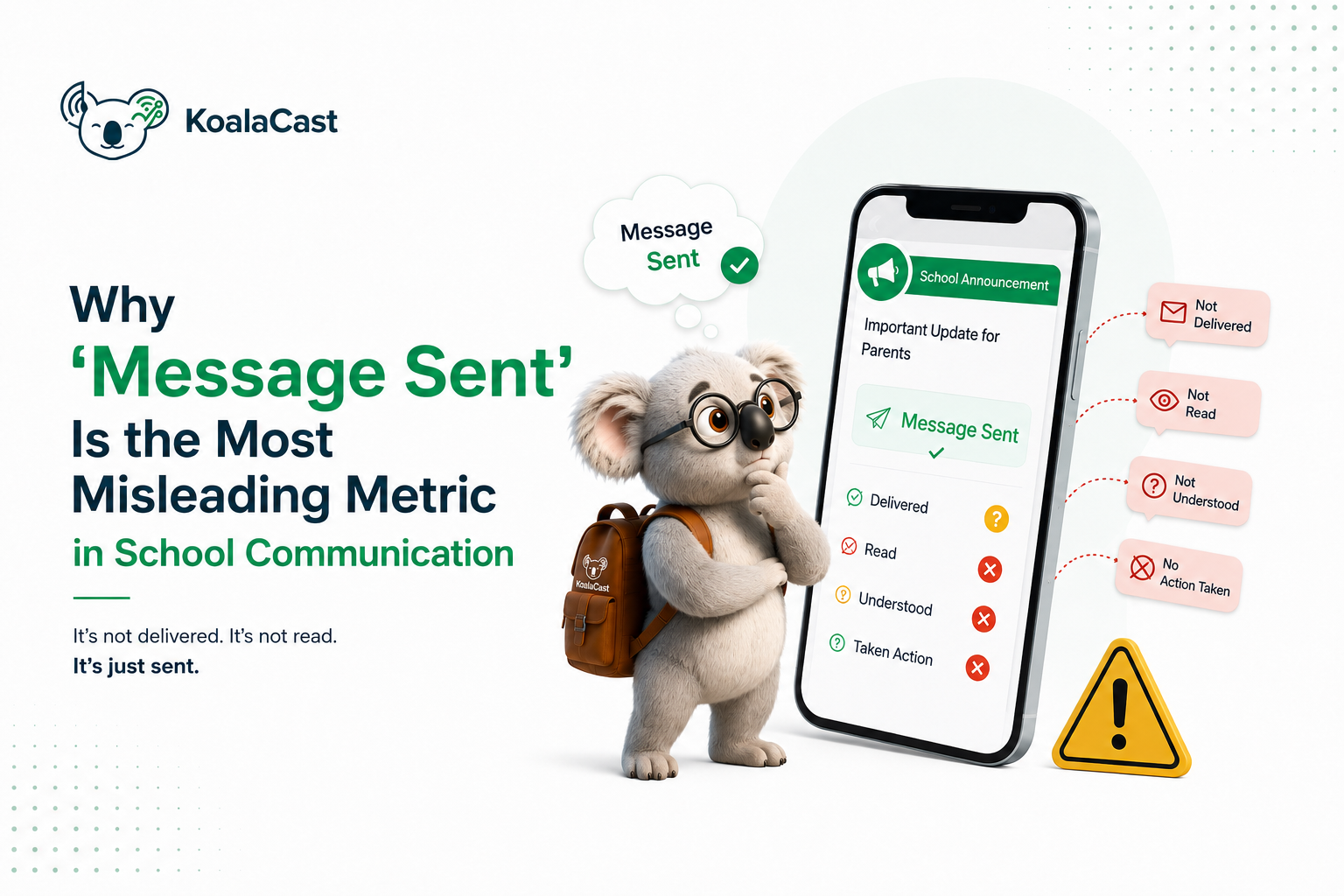
Most schools celebrate the wrong milestone.
The message was sent.
The email went out.
The WhatsApp notification was posted.
The circular was printed.
The SMS was delivered.
Job done.
Or was it?
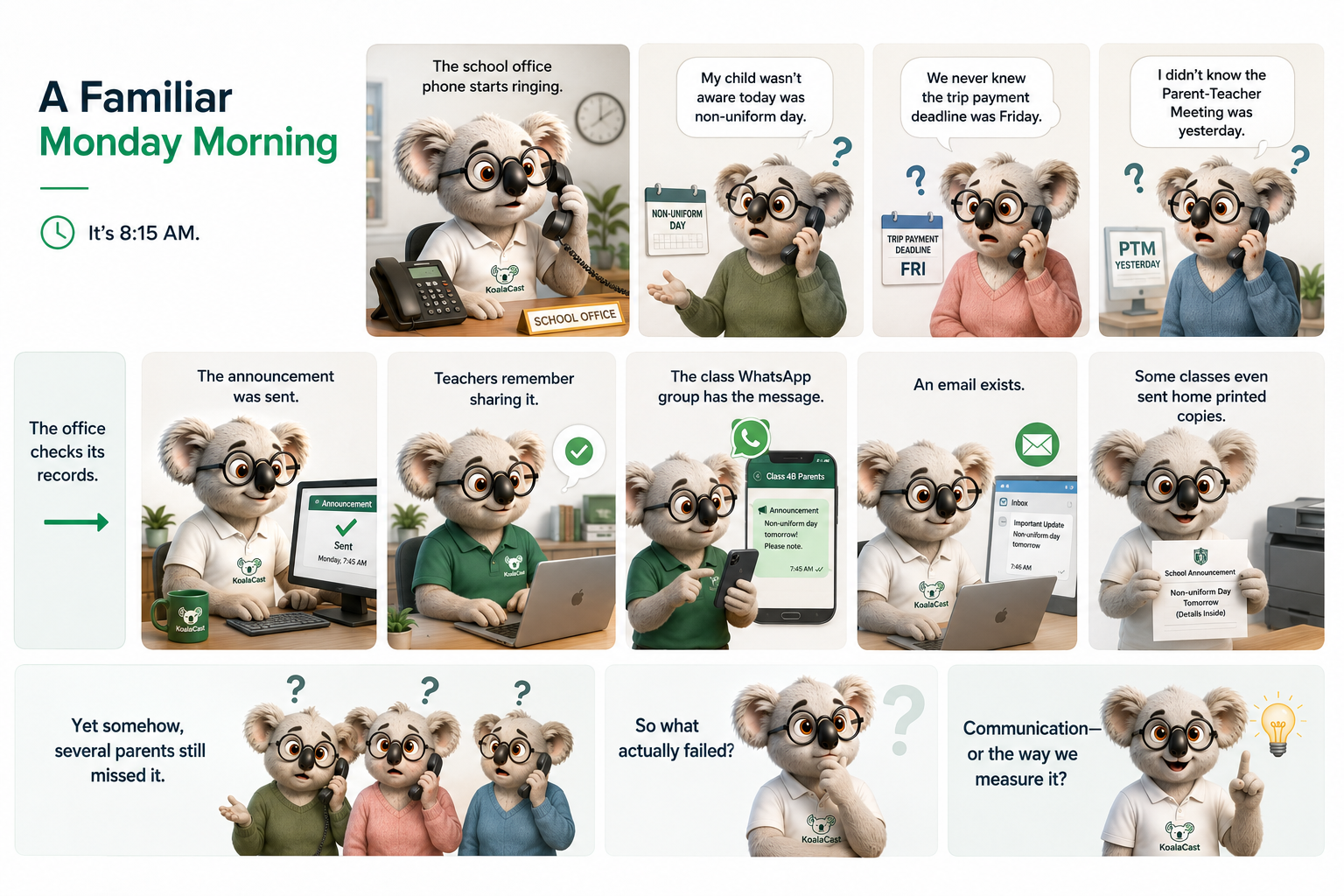
A Familiar Monday Morning
It's 8:15 AM.
The school office phone starts ringing.
"My child wasn't aware today was non-uniform day."
"We never knew the trip payment deadline was Friday."
"I didn't know the Parent-Teacher Meeting was yesterday."
The office checks its records.
The announcement was sent.
Teachers remember sharing it.
The class WhatsApp group has the message.
An email exists.
Some classes even sent home printed copies.
Yet somehow, several parents still missed it.
So what actually failed?
Communication—or the way we measure it?
The Problem with "Message Sent"
For years, schools have treated "Message Sent" as the finish line.
But sending a message is only the beginning.
Imagine ordering an important parcel.
The courier says:
We've dispatched it.
Would you feel reassured?
Probably not.
You'd want to know:
Did it arrive?Was it received?Who accepted it?When was it delivered?
Oddly enough, we expect this level of visibility for a parcel...
...but not for communication that affects children.
The Four Stages of Communication
Every school message passes through four stages.
Sent
The school publishes the information.
This is the easiest part.
Seen
Did parents actually open it?
A message buried beneath dozens of WhatsApp conversations or promotional emails may technically exist—but practically, it never reached the intended audience.
Understood
Reading isn't the same as understanding.
Did the parent realize the payment was due tomorrow?
Did they notice the venue had changed?
Did they recognize that a response was required?
Acknowledged
This is where communication becomes accountable.
An acknowledgement doesn't just say:
The message was delivered.
It says:
Someone received it, understood it, and accepted responsibility for it.
That changes everything.
Why This Matters More Than Ever
Schools are communicating more than ever before.
Fee reminders.
PTM invitations.
Consent forms.
Policy updates.
Event registrations.
Emergency notices.
The volume isn't the problem.
The visibility is.
Without visibility, administrators spend valuable time chasing confirmations instead of supporting students.
Teachers send follow-up messages.
Office staff make phone calls.
Parents insist they never received the information.
Everyone works harder.
Nobody feels more confident.
The Question Every School Should Start Asking
Instead of asking:
"Did we send the message?"
Try asking:
"Can we confidently prove it reached the right people?"
Those are very different questions.
The first measures activity.
The second measures outcomes.
And only one of them improves communication.
A New Standard for School Communication
Modern schools don't need more ways to send messages.
They need confidence.
Confidence that important information reached parents.
Confidence that acknowledgements were collected.
Confidence that reminders reached only those who still needed them.
Confidence that, months later, there is a clear record of what was shared, when it was shared, and who confirmed receiving it.
That's the difference between broadcasting information and managing communication.
Looking Ahead
As schools continue to adopt digital tools, one thing is becoming increasingly clear:
The future of school communication isn't about sending more messages.
It's about making every message count.
Platforms like
KoalaCast are being built around this very idea—not simply helping schools send announcements, but giving them visibility into what happens after the message leaves the office.
Because in the end, communication isn't complete when a message is sent.
It's complete when the right person receives it, understands it, and acts on it.